What Is ABA Therapy and How Does It Help Children in Everyday Life?
ABA Therapy in Everyday Life
Understanding what is aba therapy can feel confusing for many parents. Most online explanations focus on technical definitions or clinical language. While those descriptions are accurate, they often leave out what families really want to know: what does ABA therapy actually look like in daily life?
Parents usually start with practical questions. What happens during a session? How are goals decided? What role do parents play in the process? And how long does it take before progress becomes noticeable?
Applied behaviour analysis, often called ABA, is a structured approach used to help children learn communication, social, and everyday life skills. It focuses on understanding behaviour and teaching skills step by step. But the real experience of ABA is much more practical than the textbook definitions suggest. It involves everyday routines, guided practice, and close collaboration between professionals and families.
This blog explains what is aba therapy from a parent’s perspective and covers aba basics. It walks through how programs are structured, how therapists teach new skills, and how parents become part of the learning process at home.
Understanding What Is ABA Therapy
When parents ask what is aba therapy, they are usually looking for a clear explanation without complicated terminology. ABA therapy is a planned way of teaching skills by observing behaviour and reinforcing positive actions.
The approach focuses on small, measurable steps. Skills are broken down into manageable parts so children can practice and succeed gradually. Over time, these small steps build into meaningful abilities such as communication, independence, and social interaction.
The foundation of applied behaviour analysis for parents is understanding how behaviour works. Every behaviour has a reason behind it. ABA helps identify those reasons and teaches more helpful alternatives.
Some core principles of aba basics include:
Breaking complex skills into smaller learning steps
Using positive reinforcement to encourage progress
Practicing skills in consistent routines
Tracking progress with clear data
This structure helps professionals adjust strategies when needed. It also gives parents a clearer understanding of how their child is learning.
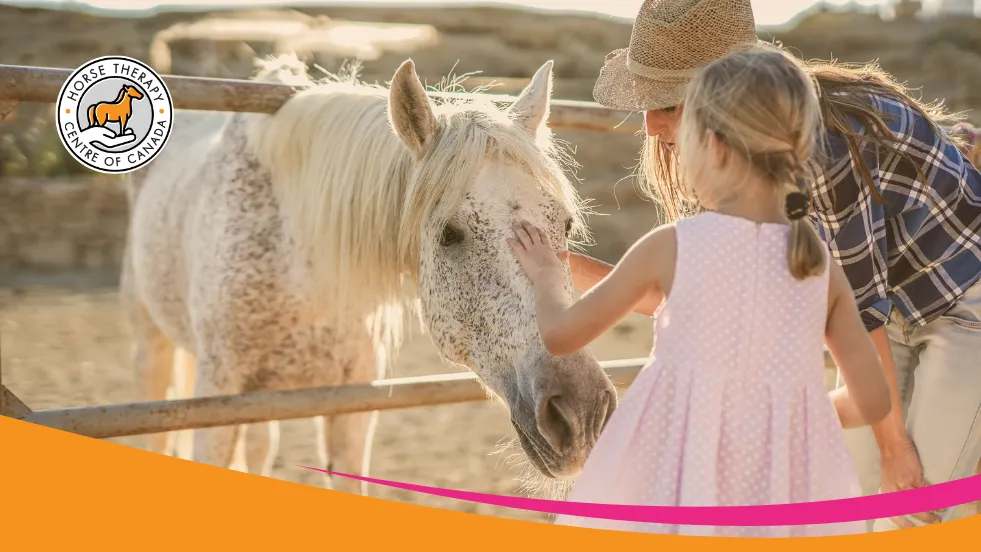
Many families are curious about how ABA therapy can work beyond a traditional clinic. At Horse Therapy Centre of Canada, farm-based ABA therapy lets children learn in a hands-on, natural environment. Through activities on the farm and interactions with horses, children can practice communication, attention, and self-regulation, giving them real-life opportunities to apply ABA strategies in everyday situations.
How Goals Are Set in ABA Therapy Programs
A major part of understanding what is aba therapy involves learning how goals are created. ABA programs do not follow a one-size-fits-all plan. Each child begins with an assessment that looks at current abilities, communication patterns, social interaction, and daily life skills.
Therapists then develop goals that are specific, measurable, and appropriate for the child’s developmental stage. These goals often focus on practical skills that improve everyday functioning.
Common areas of focus include:
Communication Skills
Children may work on learning how to request items, express needs, or answer simple questions. Some programs also introduce visual supports or alternative communication systems when verbal communication is difficult. The goal is to help children communicate more clearly and reduce frustration during everyday interactions.
Social Interaction
This area focuses on helping children understand how to interact with others in daily situations. They may practice skills such as taking turns, following instructions, or responding to basic social cues. These activities help children become more comfortable participating in group settings and conversations.
Daily Living Skills
Daily living skills help children become more independent in everyday routines. This may include learning tasks such as dressing, brushing teeth, cleaning up toys, or following simple schedules. These practical skills support independence at home, school, and in community settings.
Emotional Regulation
Children may learn strategies to manage frustration, transitions, or sensory challenges. This can include recognizing emotions, practicing calming techniques, or learning how to ask for help when overwhelmed. Over time, these strategies can help children respond to challenges in a more controlled and predictable way.
Programs are regularly reviewed and updated. Progress is monitored through ongoing observation and data collection. This allows therapists to adjust goals if a skill becomes easier or if a child needs more support.
Horse Therapy Centre of Canada integrates this goal-setting process into its farm-based ABA therapy programs. Each child’s objectives are tailored based on careful assessment, and activities on the farm, such as interacting with horses or completing practical tasks, are designed to support these goals. Progress is tracked continuously, and adjustments are made to ensure that skills are developing effectively while helping children practice communication, social interaction, daily living skills, and emotional regulation in real-life, hands-on settings.

What a Typical ABA Therapy Session Looks Like
Parents often want to know what a real session looks like once they understand what is aba therapy. In practice, sessions are structured but flexible. Activities change depending on the child’s goals and energy level that day.
A session may include short teaching moments combined with play, conversation, and routine activities. The goal is to make learning natural while still keeping it structured.
Skill Practice
Therapists guide children through tasks connected to their learning goals, such as identifying objects, answering questions, or following simple instructions. These activities are repeated in small steps so children can practice and gradually build confidence in new skills.
Reinforcement
Positive reinforcement is used to encourage progress and maintain motivation. This may include verbal praise, access to a favorite activity, or small rewards that help children stay engaged during learning.
Natural Learning Opportunities
Many programs also include real-life practice during everyday routines. For example, children may learn to ask for help during play or follow instructions during clean-up, which helps them apply skills in practical situations.
This balance between consistency and flexibility helps maintain engagement while supporting skill development. At Horse Therapy Centre of Canada, learning occurs in a farm-based environment where activities with horses are integrated into the therapy process. Guided farm experiences provide opportunities for participants to practice communication, problem-solving, and emotional regulation in real-life situations, all within a calm and thoughtfully organized setting.
The Role of Parents in ABA Therapy
Understanding what is aba therapy also includes understanding the role parents play in the process. Learning does not stop when a therapy session ends. Many of the skills children practice during sessions are strengthened through everyday routines at home.
For this reason, many ABA programs include guidance for parents. Families may learn simple strategies they can use during daily activities so children can continue practicing new skills in familiar environments. This helps learning feel more consistent and practical.
Parents may learn how to:
Reinforce helpful behaviours
Encourage communication attempts
Support smoother transitions between activities
Maintain clear and consistent routines
When these approaches are used regularly at home, children often have more opportunities to practice and improve their skills. Over time, this consistent practice can support steady progress.
Family involvement can also make the learning process more supportive for the child. Some studies have shown that when caregivers take an active role in behavioural strategies, children may have more opportunities to practice skills during daily routines (Garikipati et al., 2024).
Families play an important role in the learning process at Horse Therapy Centre of Canada. Parents can observe how farm-based activities support communication, focus, and emotional regulation, and they receive guidance on ways to reinforce these skills at home. This method helps connect therapy experiences with everyday life, making the learning more practical and meaningful
Practical ABA Techniques Parents Can Use at Home
Parents looking into what is ABA therapy often wonder how they can support their child’s learning at home. While therapists guide the main program, small daily actions from parents can help reinforce learning. Simple routines and clear responses to behaviour can make a big difference over time. These approaches are often included in aba techniques for parents and can be practiced during normal daily activities.
Positive Reinforcement
Positive reinforcement is a key part of ABA therapy. It means noticing and encouraging helpful behaviours so that children are more likely to repeat them. When a child receives praise, attention, or a small reward for a positive action, it reinforces the behaviour and builds confidence. Using positive reinforcement consistently helps children understand what is expected of them and encourages progress in everyday situations. Parents can apply these ABA techniques for parents at home, for example, by recognizing when a child shares a toy, follows instructions, or uses words to express themselves.
Clear Instructions
Children often respond better to short, clear, and simple directions. Instructions like “put the toy in the box” or “come sit here” are easier for children to follow than long or complicated explanations. Consistently using clear language is part of ABA basics and helps children understand expectations, reduces frustration, and supports skill development. Parents can use applied behaviour analysis for parents strategies by giving one instruction at a time, waiting for the child to respond, and reinforcing success with positive feedback.
Consistent Routines
Predictable routines help children feel safe and prepared for daily activities. Regular schedules for meals, playtime, and bedtime reduce confusion and make transitions smoother. Consistent routines are an essential part of ABA therapy because they help children anticipate what comes next, build independence, and reduce anxiety. Parents can use ABA resources for parents to set up structured routines at home that align with the skills being practiced during therapy sessions. Over time, children often begin to manage daily activities with more confidence and less prompting.
Gradual Skill Building
Large tasks can feel overwhelming for children. ABA therapy breaks tasks into smaller, teachable steps, allowing children to learn one part at a time and build confidence gradually. This approach encourages success in manageable pieces and makes learning feel achievable. Applied behaviour analysis for parents suggests using this method at home for daily tasks such as dressing, brushing teeth, or following simple chore routines. Combining small steps with positive reinforcement and clear instructions helps children practice skills repeatedly, making progress more consistent and meaningful.
These strategies are part of many aba resources for parents shared during parent training sessions. The goal is not to turn parents into therapists, but to help them understand simple ways to support learning at home. Families sometimes face challenges while adjusting to therapy routines and expectations. Managing schedules, maintaining consistency, and supporting a child with autism can create emotional and practical pressures for parents (Karst & Van Hecke, 2012).
Families at Horse Therapy Centre of Canada are involved in understanding how skills practiced during sessions connect to daily life. In the farm-based environment, parents can observe how activities with horses support communication, focus, and emotional regulation. This involvement helps families see how the learning strategies used in therapy can be applied at home and in everyday routines.

Challenges Families May Experience with ABA Therapy
Learning what is aba therapy also means understanding that progress usually takes time. Families may hope to see quick changes, but learning new behaviours often happens gradually. Some skills develop faster than others, while some require repeated practice over a longer period.
Parents may face challenges such as:
Keeping routines consistent at home, school, and therapy
Managing therapy schedules alongside work and family responsibilities
Feeling worried or stressed about their child’s progress
Family involvement can also bring practical and emotional challenges as parents adjust to new routines and expectations (Rusli, 2025). Because of this, support from professionals can be important during the process. Open communication between therapists and families can help answer questions and keep expectations realistic.
Support from trained professionals at Horse Therapy Centre of Canada can help families navigate these challenges. By providing guidance on maintaining consistent routines, balancing therapy with daily life, and understanding individual progress, HTCC helps families feel more confident and supported. The farm-based ABA programs also allow parents to observe and engage with activities, giving practical insight into how skills are taught and reinforced, which can make implementing strategies at home more manageable.
How Farm-Based Learning Supports Skill Development at HTCC
Farm-based environments can offer additional ways for children to practice skills outside a traditional therapy room. At Horse Therapy Centre of Canada, programs take place in a natural farm setting where learning happens through guided activities and daily routines around the farm.
Working with horses and participating in farm tasks can create natural opportunities to practice communication, attention, and emotional regulation. For example, children may follow instructions while grooming a horse, learn patience while waiting for their turn, or build focus during structured outdoor activities. These situations allow skills to be practiced in a calm and practical setting.
Farm-based environments may help support:
Confidence building: Children gain a sense of achievement by completing tasks with horses and farm activities, helping them feel capable and self-assured.
Emotional awareness: Interacting with animals and observing responses helps participants recognize and understand their own feelings in real time.
Social interaction: Group activities and guided exercises encourage communication, turn-taking, and collaboration with peers.
Real-world problem solving: Hands-on tasks on the farm allow children to practice planning, decision-making, and adapting to new situations in a practical setting.
These experiences complement traditional ABA therapy by providing additional opportunities for children to practice skills in real-life situations. Farm-based programs at Horse Therapy Centre of Canada provide organized learning in a natural setting. Interactions with horses and outdoor activities allow children to practice communication, follow routines, and develop responsibility in practical ways. The goal is to offer a supportive environment where learning occurs through guided experiences on the farm.
Supporting Children Through Consistent Learning
Understanding what ABA therapy is often becomes easier when parents see how it works in everyday life. Rather than being just a set of clinical methods, ABA focuses on helping children develop practical skills through consistent teaching, positive reinforcement, and support from both therapists and families.
Parents play an important role in this process. Practicing skills at home in addition to therapy sessions gives children more opportunities to strengthen what they learn. Progress usually takes time, but steady support and collaboration between families and professionals help create meaningful learning experiences.
Farm-based ABA programs at Horse Therapy Centre of Canada are designed to support individuals and families through hands-on, practical learning. Activities take place in a farm environment where participants can build confidence, communication skills, and emotional awareness through guided interactions with horses and outdoor routines. HTCC emphasizes family involvement and open communication to ensure the learning continues beyond the sessions.
Frequently Asked Questions
What is ABA therapy and how does it help children?
ABA therapy refers to applied behaviour analysis, a structured approach used to teach communication, social, and life skills. It works by identifying how behaviour functions and reinforcing positive actions through consistent practice. At Horse Therapy Centre of Canada, ABA programs are designed to help children apply these skills in practical, everyday settings, including farm-based activities and interactions with horses, making learning more meaningful and hands-on.
How can parents support ABA therapy at home?
Parents can reinforce therapy goals by using simple strategies such as positive reinforcement, clear instructions, and consistent routines. Many therapists also provide ABA resources for parents that help families practice skills outside therapy sessions. HTCC emphasizes family involvement, giving guidance so parents can support their child’s learning at home while connecting it to the activities practiced during farm-based sessions.
How long does ABA therapy usually last?
The length of ABA therapy varies depending on the child’s needs and goals. Some children participate for several months, while others may continue programs for multiple years as new skills develop. Programs at Horse Therapy Centre of Canada adapt over time, tracking progress and adjusting activities to meet evolving developmental goals.
Are there ABA techniques parents can learn easily?
Yes. Many programs teach ABA techniques for parents that are simple to apply at home. These may include reinforcing positive behaviours, breaking tasks into smaller steps, and creating predictable routines. Horse Therapy Centre of Canada also provides practical guidance for families, showing how these strategies can be incorporated naturally into daily life to reinforce learning.
Is ABA therapy only done in clinics?
No. While some programs take place in clinics, many also occur in homes, schools, or community environments. Experiential settings, like farm-based programs, support learning by giving children real-world opportunities to practice skills. Horse Therapy Centre of Canada integrates farm activities and interactions with horses, helping children practice communication, focus, and self-regulation in a safe, hands-on environment.
For More Information
If you would like to explore related topics, these articles from Horse Therapy Centre of Canada may be helpful:
Strengthening the Mind-Body Connection Through Equine-Assisted Therapy
Empowering Neurodiverse Individuals Through Equine-Assisted Therapy
Hands-On Healing: Experiential Learning in Equine-Assisted Therapy for Growth and Self-Discovery
Effective Parenting Tips: Raising Happy and Healthy Children with Equine Assisted Therapy
References
Garikipati, A., Ciobanu, M., Singh, N. P., Barnes, G., Dinenno, F. A., Geisel, J., Mao, Q., & Das, R. (2024). Parent-led applied behaviour analysis to impact clinical outcomes for individuals on the autism spectrum: Retrospective chart review. JMIR Pediatrics and Parenting, 7, e62878. https://pmc.ncbi.nlm.nih.gov/articles/PMC11540247/
Karst, J. S., & Van Hecke, A. V. (2012). Parent and family impact of autism spectrum disorders: A review and proposed model for intervention evaluation. Clinical Child and Family Psychology Review, 15(3), 247–277. https://doi.org/10.1007/s10567-012-0119-6
Rusli, N. A. (2025). Parental involvement in applied behaviour analysis (ABA) therapy for autism spectrum disorder (ASD) children: A focus on logistical, emotional, social-relational, and systematic challenges. Journal of Social and Educational Research, 4(1), 1–11. https://www.journalser.com/jser/article/view/57
Discover Farm-Based ABA Therapy Programs
Families exploring what is aba therapy often want to understand how different environments can support learning and development. Farm-based programs can provide opportunities for children to practice communication, attention, and emotional regulation during structured activities in a natural setting.
Horse Therapy Centre of Canada offers farm-based ABA therapy where learning takes place through guided interactions with horses and daily farm routines. If you would like to learn more about available programs or educational opportunities, you can contact HTCC for more information.