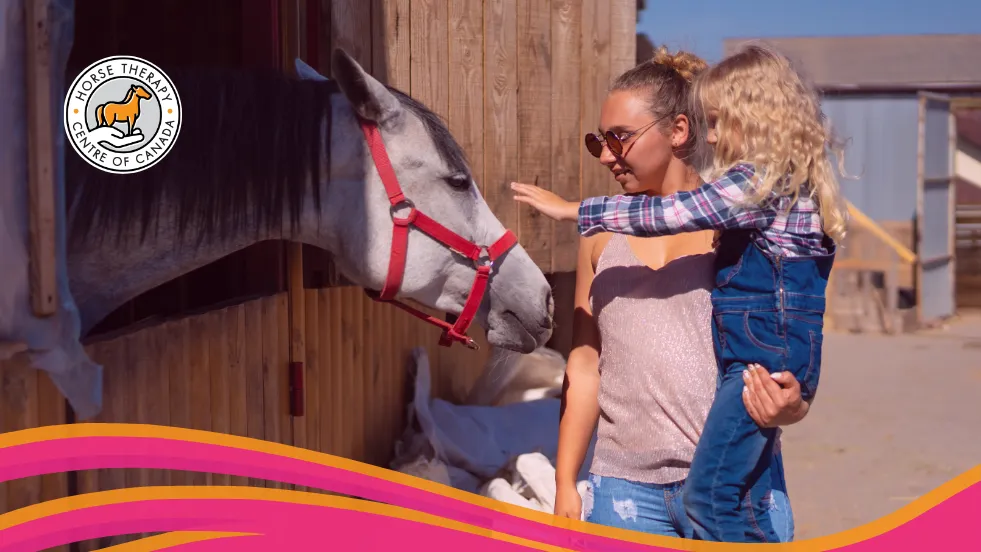
What Makes Farm-Based ABA Therapy Different From Traditional Therapy
Understanding ABA Therapy in a Farm-Based Setting
Learning new skills does not always have to happen at a therapy table. Many children learn best when they are moving, exploring, and taking part in real activities. In some programs, everyday tasks like caring for animals, carrying tools, or working outdoors can become opportunities to build communication, problem-solving, and self-regulation skills.
This idea is now being applied to ABA therapy, a structured approach based on the science of applied behaviour analysis. While traditional programs often take place in clinics or therapy rooms, farm-based programs bring the same behavioural principles into natural environments. Instead of learning only through drills or worksheets, children practice skills during hands-on activities that feel meaningful and engaging.
Understanding how these models differ can help families make informed decisions about ABA services. This blog explains what ABA therapy looks like in both traditional and farm-based settings, how each approach works, and what factors families may want to consider when choosing the right support.
The Basics of ABA Therapy and How It Works
Before comparing traditional and farm-based approaches, it helps to first understand what is aba therapy. Aba therapy is based on the science of applied behaviour analysis and focuses on helping children develop useful skills step by step. Skills are broken down into smaller parts so they can be practiced gradually, and progress is tracked so the aba therapist can see what is working and where additional support may be needed.
Some people assume aba therapy is rigid or repetitive. In reality, the approach is flexible. It focuses on understanding why a behaviour occurs and using consistent strategies to encourage helpful behaviours while reducing those that may interfere with learning. This is why aba services can look different depending on the setting and how support is provided.
The Foundations of Applied Behaviour Analysis
Applied behaviour analysis is guided by several principles that shape how aba therapy is planned and delivered:
Observable and measurable goals: Skills are defined in ways that can be clearly seen and measured, such as following instructions, using words to communicate needs, or completing a task independently.
Clear teaching procedures: The aba therapist uses structured methods to teach each skill step by step so the child understands what is expected.
Ongoing data collection: Progress is recorded during sessions so the therapist can track how often a skill is practiced and how well it is improving.
Adjustments based on progress: If a strategy is not helping the child learn, the therapist can change the approach based on the data collected.
Reinforcement that motivates the learner: Positive reinforcement, such as praise, preferred activities, or small rewards, is used to encourage behaviours the child is learning.
These principles help ensure that aba services remain structured, consistent, and focused on meaningful skill development.
Early intensive behavioural intervention models have shown positive outcomes for many young children with autism spectrum disorder, particularly when delivered consistently and systematically (Reichow et al., 2012). These findings helped establish ABA intervention autism as a widely recognized support option.
At Horse Therapy Centre of Canada, these same principles guide how aba therapy is delivered, even when sessions take place in a farm environment rather than a clinic. The focus remains on clear goals, structured teaching, and consistent progress tracking so that hands-on activities still support the same behavioural learning objectives.
What Traditional ABA Therapy Looks Like
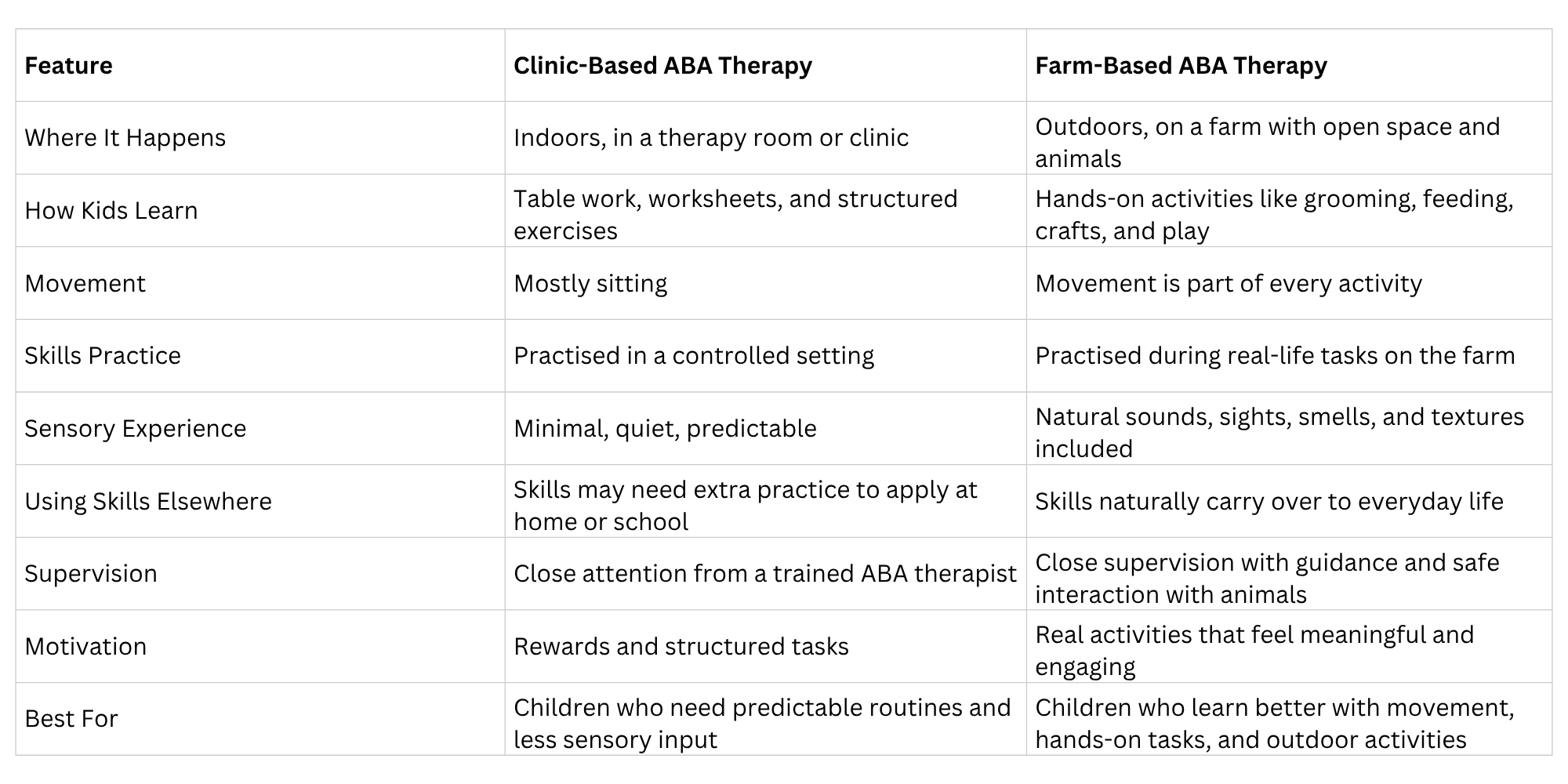
Traditional or clinic-based aba therapy for children usually takes place in quiet, structured settings such as therapy rooms or specialized centres. During sessions, children may work at a table with an aba therapist and practice specific skills through guided activities. The environment is kept calm and predictable so there are fewer distractions while the child learns.
This approach has several advantages. It allows for:
Repetition of skills to help learning stick: Children can practice the same skill multiple times, so it becomes more familiar and easier to remember.
A predictable, controlled environment: The setting is kept calm and structured, which helps reduce distractions and supports focused learning.
Step-by-step skill building: Skills are taught in small steps so children can gradually build confidence as they learn.
Close supervision by a trained ABA therapist: The therapist observes the child’s responses closely and adjusts the teaching approach when needed.
For some children, especially those who do best with routine and fewer sensory distractions, this type of setting can work very well.
One challenge families sometimes notice is something called generalization. A child may learn a skill in the therapy room but find it harder to use the same skill at home, at school, or in everyday situations. This does not mean ABA therapy is not working. It simply shows that children often need opportunities to practice skills in different environments.
At Horse Therapy Centre of Canada, programs are designed with this in mind. Farm-based sessions and hands-on activities give children chances to practice skills in more natural situations, helping them use what they learn during ABA services in everyday life.
How Farm-Based ABA Therapy Works Differently
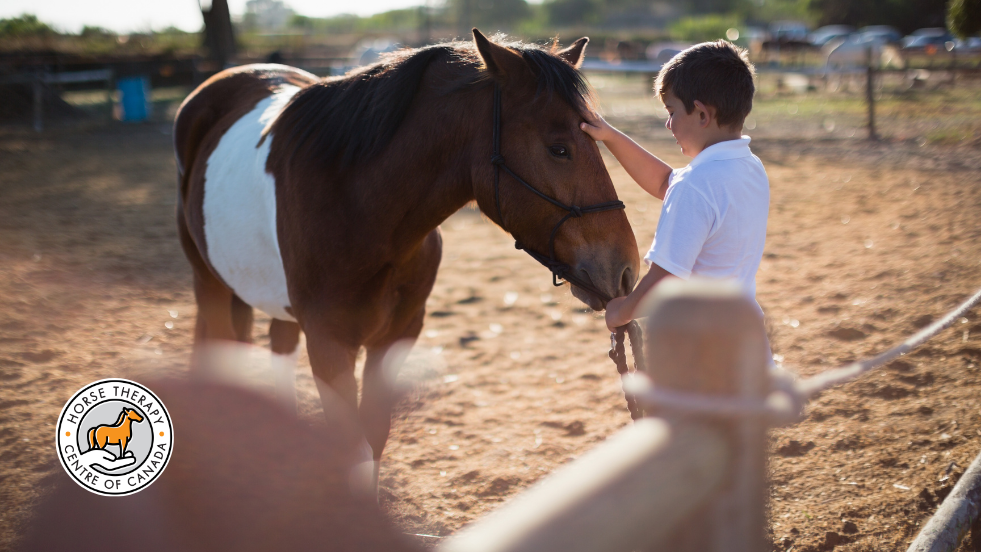
Farm-based aba therapy for kids uses the same principles as traditional applied behaviour analysis, but the learning happens in a more natural, hands-on environment. The science behind the approach stays the same. What changes is where and how the skills are practiced.
In a farm setting, many learning opportunities happen during real activities. Instead of practicing turn-taking with a card game at a table, a child might practice waiting while holding a lead rope or taking turns during a task. Instead of communicating only with picture cards, they may request tools, name animals, or follow simple instructions while feeding or grooming.
Practicing skills in this kind of environment can make learning feel more meaningful. Children are using communication, patience, and problem-solving while taking part in activities that happen naturally around them. For some children, this can make it easier to understand why the skill matters and help them use it more easily in everyday situations.
Learning Through Real Responsibilities
Daily farm activities can create natural opportunities to teach important skills through aba therapy. These activities allow children to practice skills while taking part in real tasks.
Communication skills: Children may practice asking for tools, responding to instructions, or using words to express their needs during activities.
Motor coordination: Tasks like carrying buckets, brushing animals, or walking across uneven ground help children develop balance and coordination.
Emotional regulation: Children learn to stay calm, manage frustration, and adjust their reactions while completing tasks.
Problem-solving: Farm tasks often require children to think about what to do next, follow steps, or figure out how to complete an activity.
Social interaction: Activities may involve working with a therapist or taking turns with others, helping children practice cooperation.
Tasks like grooming a horse, carrying feed buckets, cleaning stalls, or moving through open spaces naturally require focus, sequencing, and teamwork. These activities are not random. A trained aba therapist plans them carefully and looks for moments where skills can be practiced while tracking progress during the session.
Farm-based activities at Horse Therapy Centre of Canada are planned around clear learning goals. Each session connects real-life tasks with measurable objectives so progress can be monitored over time. This helps ensure that hands-on experiences stay aligned with the principles of applied behaviour analysis while supporting practical skill development through aba services.
Clinical-Based vs. Farm-Based ABA Therapy
Why Natural Environments Can Strengthen Engagement
Engagement plays an important role in learning. Some children focus more easily when they can move, use their hands, and interact with their surroundings rather than sitting at a table for long periods. Farm-based programs apply the principles of ABA therapy in settings where learning happens during active, hands-on experiences.
Movement and Regulation
A farm environment naturally allows children to move between activities while practicing important skills. These experiences can support:
Gross motor movement through walking, lifting, and guiding tasks
Opportunities for sensory integration through touch, sound, and movement
Practicing breathing and emotional regulation during structured activities
Developing awareness of body position and coordination
This type of movement can help some children remain engaged and reduce frustration during learning tasks. Instead of remaining seated for extended periods, children transition between purposeful activities that require attention, cooperation, and problem-solving.
Connection to Nature
Spending time outdoors may also support emotional well-being. Studies suggest that interaction with natural environments can help reduce stress and support positive mood in children (Tillmann et al., 2018). While nature itself is not a therapeutic method, it can create a setting that encourages calm focus and participation.
The farm environment is structured to support learning while maintaining safety and supervision. At Horse Therapy Centre of Canada, activities are planned around specific goals connected to applied behaviour analysis, ensuring that outdoor experiences remain purposeful. This approach allows the environment to support engagement while still maintaining the structured framework expected in aba services.
The Process Behind Farm-Based ABA Therapy
Many families wonder how progress is tracked and measured in a farm-based setting. The answer is careful planning and a structured approach. Being outside a clinic does not mean learning happens randomly. Each activity is planned so it connects to specific goals. This helps ensure that time on the farm is not just enjoyable, but also supports real learning.
Even in an outdoor environment, sessions are designed to teach skills and collect meaningful data. The activities may look different from clinic-based work, but the planning behind them helps keep the learning focused and consistent.
1. Assessment and Goal Setting
The first step is understanding the child’s strengths and areas where support may help. This includes looking at communication, behaviour, and daily living skills. Based on this assessment, clear and practical goals are created so progress can be measured. Examples include:
Requesting help independently
Following the two-step instructions
Increasing frustration tolerance
Assessments help guide how each program is planned so activities match the child’s needs and support steady progress.
2. Breaking Skills Into Steps During Real Activities
In aba therapy, skills are broken down into smaller, manageable steps. This approach, based on applied behaviour analysis, helps children learn gradually. For example, if a child is learning sequencing during feeding, the task might include:
Collect the bucket
Measure the feed
Carry the bucket safely
Pour the feed into the trough
Each step becomes a chance to practice a skill during a real activity, helping children learn in context rather than only through table work.
3. Reinforcement and Progress Tracking
Reinforcement is chosen based on what motivates the child. This may include verbal praise, access to preferred activities, or natural outcomes like seeing the horse respond to their actions.
During every session, progress is recorded so the aba therapist can see how skills are developing. This information helps guide adjustments to teaching strategies when needed.
4. Practicing Skills Across Different Settings
When skills are practiced during real activities, children may find it easier to use them in other environments. They learn communication, emotional regulation, and problem-solving while moving, interacting, and completing tasks.
Families are included in the planning process so strategies can continue at home and in daily routines. At Horse Therapy Centre of Canada, therapists work with families to help them understand the goals being practiced during aba therapy. This helps create consistency between sessions and everyday life, giving children more opportunities to practice and use their skills in real-world situations.
Who Can Benefit From Farm-Based ABA Services
Farm-based ABA programs can be a good fit for children who learn best through hands-on, movement-based activities. It works well for kids who may struggle to stay engaged in traditional clinic sessions or who benefit from practical, real-life tasks. Families looking for skills that can be used at home, school, or in daily routines often find this approach helpful.
At Horse Therapy Centre of Canada, recommendations are always based on each child’s individual strengths and needs, not on trends or assumptions.
Potential Candidates Include:
Children with autism spectrum disorder
Learners who respond well to movement-based activities
Children who have difficulty engaging in clinic-based sessions
Families focused on functional, daily-living skill development
Farm-based activities work best when they feel meaningful to the child instead of like random exercises. When children take part in real tasks, it can be easier for them to understand why the skill matters. Progress is tracked using clear goals so learning can be seen over time and practiced in a practical way. At Horse Therapy Centre of Canada, programs are planned around each child’s needs to support skill development in a way that fits how they learn best.
Finding the Right ABA Therapy Environment
Farm-based aba therapy can be a great fit for many children, especially those who learn well through hands-on activities and outdoor experiences. However, every child is different. Some may learn better in a quieter, more structured clinic setting where distractions are limited. Choosing the right environment depends on the child’s individual needs, comfort, and safety.
For example, another setting may be considered if a child:
Has severe allergies to animals or outdoor environments
Needs very controlled sensory conditions to stay focused
Has medical needs that require close clinical supervision
In some cases, a combination of approaches can work well. A child may receive clinic-based aba services while also taking part in outdoor or activity-based learning. At Horse Therapy Centre of Canada, staff work with families and other professionals to help determine the environment that best supports each child’s development and learning goals.
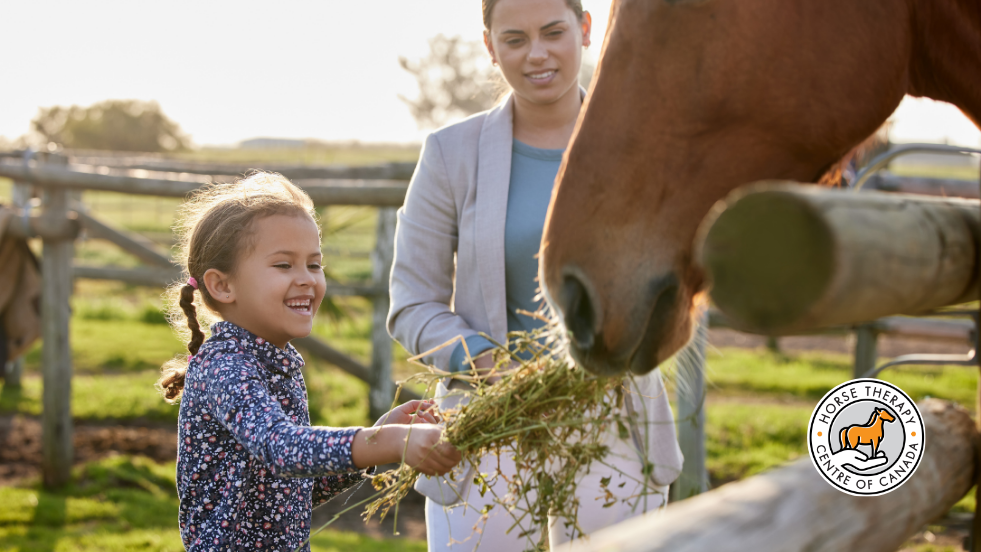
Measuring Growth in Farm-Based ABA Therapy
In farm-based ABA therapy for kids, progress is measured by clear, visible changes in skills and behaviour. While it’s great when children are engaged and enjoying themselves, these are not the main signs of success. What matters most is whether the specific skills being taught are improving and whether challenging behaviours are decreasing over time. Each goal is written in a way that makes it easy to track progress.
Examples of Measurable Outcomes
More independent attempts to communicate
Fewer or less intense challenging behaviours
Better completion of tasks
Greater tolerance for transitions between activities
Improved social skills with peers or adults
Collecting data is key to understanding progress. Even in an outdoor farm setting, every session is planned around clear goals, and progress is recorded consistently. Teaching methods are adjusted based on what the data shows, not on guesses.
At Horse Therapy Centre of Canada, progress reviews are open and collaborative. Families get clear updates on what their child is learning and how skills are improving. This ensures everyone understands exactly how learning is measured and what goals are being achieved.
Ensuring Safe and Ethical Farm-Based ABA Therapy
Safety and professionalism are essential in any ABA therapy program. Farm-based sessions follow the same behavioural principles used in clinic settings, but the outdoor environment requires additional planning and supervision. Working around animals, moving through open spaces, and using tools or equipment means activities must be carefully structured. Clear procedures and trained staff help ensure that children can learn safely while participating in hands-on experiences.
Qualified Professionals
Farm-based programs should be led or supervised by licensed professionals trained in applied behaviour analysis. An experienced aba therapist knows how to balance clear learning goals with the realities of an outdoor setting. They guide activities in a way that still supports structured learning while also keeping children safe around animals and managing situations that can come up in a farm environment.
Professionals in these programs typically:
Conduct assessments to understand a child’s needs and strengths
Create behaviour plans based on clear goals and evidence-based strategies
Track progress and collect data consistently
Adjust teaching methods responsibly as the child develops new skills
This professional oversight ensures that learning remains structured and aligned with recognized ABA services standards.
Structured Risk Management
A farm setting requires clear safety procedures that are practiced and reviewed regularly. Activities are planned with careful attention to supervision, environmental conditions, and each child’s readiness for specific tasks. Safety planning is proactive, with procedures designed to prevent risks rather than respond after an incident occurs.
Programs should include guidelines for:
Safe interaction with animals
Correct use of tools and equipment
Emergency preparedness
Maintaining appropriate supervision ratios
Ethical practice also includes setting realistic goals and communicating openly with families about progress and expectations. At Horse Therapy Centre of Canada, safety protocols, professional standards, and ongoing staff training are integrated into every program. This structured approach helps ensure that farm-based learning remains both safe and aligned with the principles of ABA intervention autism.
FAQs about Farm-Based ABA Therapy
Is farm-based aba therapy as effective as clinic-based programs?
Effectiveness depends on the individual child and the consistency of implementation. When applied behaviour analysis principles are delivered with clear goals and careful data tracking, progress can occur in both clinic and farm settings. The main difference lies in how skills are practiced and generalized across environments.
What is ABA therapy in a traditional setting, and how is it different on a farm?
What is aba therapy refers to a structured, evidence-based approach that teaches skills through measurable goals and reinforcement. It focuses on understanding behaviour and building functional alternatives. On a farm, these same principles are applied within daily routines and hands-on activities rather than only at a table.
Can ABA intervention autism happen outside a clinic?
Yes, ABA intervention autism can be delivered in homes, schools, and community settings. The key factor is whether applied behaviour analysis strategies are implemented consistently and monitored through data. A natural environment can support skill development when programming remains structured and individualized.
Are ABA services covered the same way in farm settings?
Coverage for ABA services depends on the insurance provider and regional funding guidelines. Some plans focus on the credentials of the supervising professional rather than the setting itself. Families should confirm eligibility and request documentation about how services are structured.
What qualifications should an aba therapist have?
An aba therapist should have formal education and supervised experience in applied behaviour analysis. They must be trained in assessment, data collection, and behaviour plan development. Families should feel comfortable asking about credentials, supervision, and safety procedures before starting services.
For More Information
You may find the following blogs helpful:
Empowering Neurodiverse Individuals Through Equine-Assisted Therapy
Hands-On Healing: Experiential Learning in Equine-Assisted Therapy for Growth and Self-Discovery
Strengthening the Mind-Body Connection Through Equine-Assisted Therapy
Effective Parenting Tips: Raising Happy and Healthy Children with Equine Assisted Therapy
These resources provide additional insight into experiential learning, regulation, and skill development within structured environments. Additional information about farm-based aba therapy and equine-assisted services is available through Horse Therapy Centre of Canada.
References
Reichow, B., Barton, E. E., Boyd, B. A., & Hume, K. (2012). Early intensive behavioural intervention (EIBI) for young children with autism spectrum disorders (ASD). Cochrane Database of Systematic Reviews, 10, CD009260. https://doi.org/10.1002/14651858.CD009260.pub2
Schreibman, L., Dawson, G., Stahmer, A. C., et al. (2015). Naturalistic developmental behavioural interventions: Empirically validated treatments for autism spectrum disorder. Journal of Autism and Developmental Disorders, 45(8), 2411–2428. https://doi.org/10.1007/s10803-015-2407-8
Tillmann, S., Tobin, D., Avison, W., & Gilliland, J. (2018). Mental health benefits of interactions with nature in children and teenagers: A systematic review. Journal of Epidemiology and Community Health, 72(10), 958–966. https://doi.org/10.1136/jech-2018-210436
Exploring Your ABA Therapy Services
Choosing the right support model takes time and careful thought. If you are exploring options and want to understand whether farm-based aba therapy may fit your child’s needs, having a conversation can help answer your questions.
At Horse Therapy Centre of Canada, programs are developed with each child’s needs in mind and are grounded in the principles of applied behaviour analysis. Families are provided with clear information about how aba services work so they can make informed decisions. If you would like to learn more about the program or speak with someone about whether this approach may be a good fit for your child, you can contact HTCC to connect with their team.